Back to blog
London Marathon Tips & Race Day Strategy: Do We Really Need Gels and Electrolytes?

London Marathon Tips & Strategies
The Role of Gels on Race Day
Why Not Just Eat Real Food?
Runner's Gut, Solved
Choose Your Fuel Right
The Truth About Electrolytes
Race Day Hydration
Healthy Meal Delivery
Final Thoughts
The Role of Gels on Race Day
Why Not Just Eat Real Food?
Runner's Gut, Solved
Choose Your Fuel Right
The Truth About Electrolytes
Race Day Hydration
Healthy Meal Delivery
Final Thoughts
Part Two of our London Marathon Nutrition Series
In our last article, we covered the foundations of marathon nutrition. Now, with the London Marathon just days away, it’s time to talk about intra-race fueling. How to keep your energy up, your gut settled, and your performance strong. Read on for more London marathon tips and tricks.
In our last article, we covered the foundations of marathon nutrition. Now, with the London Marathon just days away, it’s time to talk about intra-race fueling. How to keep your energy up, your gut settled, and your performance strong. Read on for more London marathon tips and tricks.

The London Marathon Tips and Strategies
If you’re running the London Marathon this year, you’ll probably need these marathon preparation tips for the best performance and a smoother, stronger race day experience.
From dialling in your nutrition and hydration to managing your marathon run training and recovery, every detail adds up. The goal isn’t just to finish, it’s to feel good doing it. By building the right habits now, you set yourself up to run stronger, recover faster, and avoid common setbacks along the way.
The Role of Gels: Your "External" Fuel Tank
Even with full glycogen stores, your body only has enough carbs for ~60–90 minutes at marathon intensity. Once depleted, “the wall” hits (Smyth, 2021). Gels provide fast-acting glucose to spare your internal stores and keep blood sugar stable.
How To Use Them?
- Aim for around 60g of carbs per hour (elite runners may target 70–90g) (Cao et al., 2023).
- Most gels contain 20–30g of carbs → roughly 2 gels per hour.
- Fuel Ahead. Start fueling early, don’t wait until you feel tired. This prevents the mental and physical bonk.
The bottom line is, even if you do not feel like you NEED a gel on your run. It is still best to take them for runs of over an hour. This can also contribute to a quicker recovery, feeling better in subsequent sessions, and you won’t feel completely exhausted for the rest of the day.
Can’t I Just Eat Real Food?
Sometimes we find runners opt for sweets, bananas, or dried fruit. Whilst these foods do contain carbs, they aren't the most efficient marathon fuel.
WHY?
1- VOLUME. For example, you would need to eat half a pack of percy pigs every hour to hit your carb targets.
2- DIGESTION: Fruits contain fibre and solids that slow down gastric emptying. In a race, this leads to a heavy stomach and bloating. Gels are engineered to be lightweight and rapidly absorbed, making them the superior choice for high-intensity efforts.
Whole foods could be used occasionally to supplement your gels. But gels should make up the backbone of your race fuel.
Solving “Runner’s Gut"
Gastrointestinal distress is the top reason for a DNF (Did Not Finish) (Pfeiffer et al., 2012). Blood flow shifts away from the gut during running, and jostling can make digestion tricky. Train your gut like your legs: start with small sips of gel on long runs, gradually increasing intake. This builds digestive efficiency and confidence, reducing the risk of nausea on race day.
Learn more about gut health here.
How to Choose Your Fuel
Not all gels are created equal. Many are laden with artificial thickeners and additives that can irritate the gut lining.
- Dual-Carb Mechanism: Look for a blend of glucose and fructose. Your body uses two different transporters to absorb these. Using both allows you to absorb more carbs without them sitting in your gut and causing distress (Jeukendrup, 2010).
- Keep it Simple: Opt for minimally processed options with fewer ingredients.
- Compliance: The best fuel is the one you actually want to take. If a gel is too sickly or has a questionable texture, you'll likely skip it.
Remember, there is no right or wrong answer. The best gel is the one that works best for you. Make sure you use the same gels for running the London Marathon as you would for training.
The Truth About Electrolytes
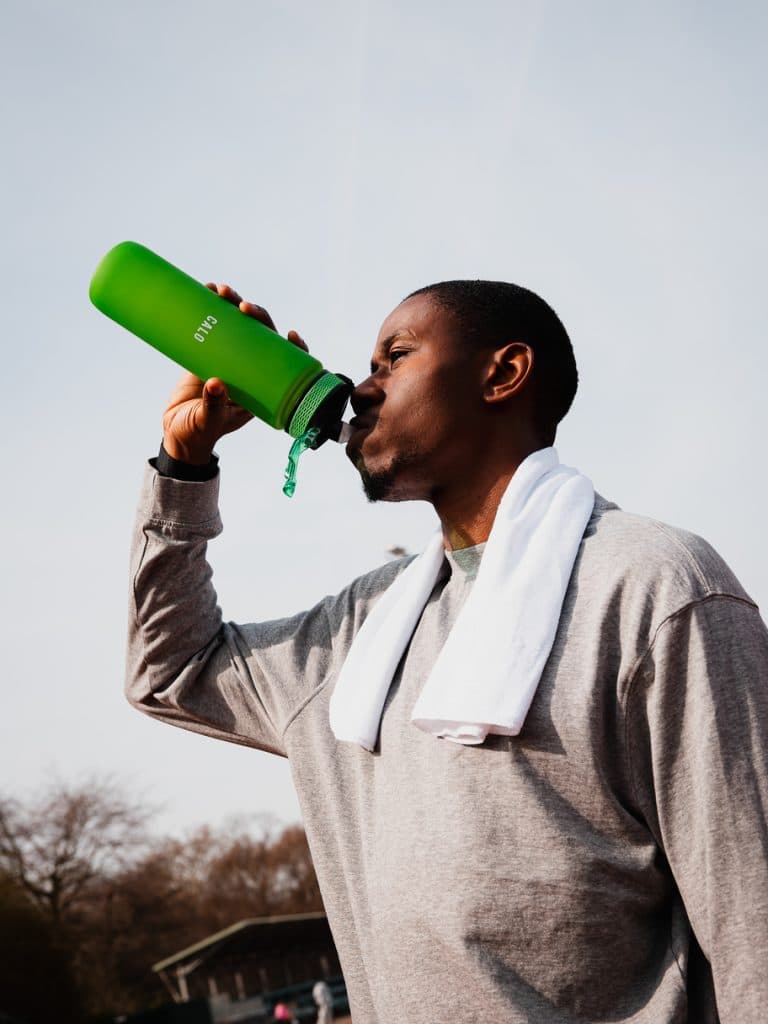
Electrolytes (Sodium and Potassium) support muscle and nerve function. However, the wellness industry often overstates its necessity for every run, or even in day-to-day life.
Are they necessary? For runs under 90 minutes, usually no. Your body is highly effective at regulating itself through a balanced diet, some salty food and water.
When to use them: They become useful during runs over 90 minutes, in high humidity, or if you are an exceptionally salty sweater.
Check your gels: Many high-quality gels already contain enough sodium. If yours do, you can likely skip the expensive salt tablets and sachets.
Race Day Hydration
On race day, the goal isn't to replace 100% of fluid and mineral loss, which is physiologically impossible, but to provide enough to help your kidneys maintain a proper osmotic gradient. Over-hydrating with plain water is actually more dangerous than mild dehydration, as it can lead to hyponatremia (critically low blood sodium).
As a general guide, aim for around 400–800ml of fluid per hour depending on temperature and your individual sweat rate. Sip regularly rather than drinking large volumes at once, and use long training runs to refine what feels comfortable and sustainable for you.
Why hydration matters more than you think? Learn more here.
Healthy Meal Delivery: Stay Fuelled Beyond Race Day
Race day fueling might come down to gels and timing, but everything around it still matters. What you eat before and after your runs plays a huge role in how you perform and recover.
With the Calo App, your daily nutrition is already taken care of. Balanced meals, performance-focused macros, and zero time spent planning or tracking, so you can focus on training, not logistics.
Show up fuelled. Recover stronger. Let Calo handle the rest.
Looking for Convenient Halal Fuel Options?
If you’re prioritising healthy halal food during training, consistency shouldn’t be a struggle. Try Calo and get reliable halal meal delivery that fits your routine, no prep, no time wasted, no guesswork. With everyday meal prep halal options, it’s a simple way to stay on track while keeping your nutrition aligned with your needs.
Final Thoughts: London Marathon Tips
The goal of intra-race marathon nutrition is consistency: a steady supply of glucose and a settled, well-tolerated gut.
Your marathon is a celebration of months of hard work, and fuelling well ensures your body can show up and perform the way you’ve trained it to. Start early (before hunger kicks in), stick to the products you’ve practised with, and keep your intake steady by spacing out sips and fuel throughout the race.
Read about stretching exercises and more about the benefits and downsides of running a treadmill here, or explore more health-related topics on the Calo blog.
References
1- Smyth, B. (2021) ‘How recreational marathon runners hit the wall: a large-scale data analysis of late-race pacing collapse in the marathon’, PLOS ONE, 16(5), p. E0251513.
2- Cao, W., He, Y., Fu, R., Chen, Y., Yu, J. and He, Z. (2023) ‘A review of carbohydrate supplementation approaches and strategies for optimising performance in elite long-distance endurance’, Nutrients, 15(17), p. 3905.
3- Pfeiffer, B., Stellingwerff, T., Hodgson, A.B., Randell, R., Pöttgen, K., Res, P. and Jeukendrup, A.E. (2012) ‘Nutritional intake and gastrointestinal problems during competitive endurance events’, Medicine & Science in Sports & Exercise, 44(2), pp. 344–351.
4- Jeukendrup, A.E. (2010) ‘Carbohydrate and exercise performance: the role of multiple transportable carbohydrates’, Current Opinion in Clinical Nutrition and Metabolic Care, 13(4), pp. 452–457.