Back to blog
A Guide to High Protein Vegan Foods
How To Eat Enough High Protein Vegan Food
'Complete & Incomplete' Vegan Protein Sources
The Big 4 Micronutrients
Healthy Meal Delivery
'Complete & Incomplete' Vegan Protein Sources
The Big 4 Micronutrients
Healthy Meal Delivery
Shifting to a plant-based diet is a widely recognised strategy for improving overall health. However, to maintain muscle mass and meet daily protein requirements, it is important to prioritise high protein vegan foods and combine a variety of vegan protein choices to achieve a complete amino acid profile.
By reducing red and processed meat intake, saturated fat consumption decreases while fibre intake increases, supporting both cholesterol levels and gut health. That said, achieving sufficient protein on a vegan diet requires a more strategic approach. This guide explores the best high protein foods and explains how to get enough protein from plant-based sources.

How To Eat Enough High Protein Vegan Food
Not all protein is created equal. Animal proteins (meat, eggs, dairy) are highly ‘bioavailable’, meaning the body can easily absorb and utilise them. They typically have a high PDCAAS (Protein Digestibility Corrected Amino Acid Score).
Plant proteins, however, are encased in fibre and often contain ‘anti-nutrients’ like phytates that can interfere with absorption. Studies suggest that plant-based protein is generally 10 - 20% less digestible than animal protein due to these structural differences (Opazo-Navarrete et al., 2025).
Plant proteins, however, are encased in fibre and often contain ‘anti-nutrients’ like phytates that can interfere with absorption. Studies suggest that plant-based protein is generally 10 - 20% less digestible than animal protein due to these structural differences (Opazo-Navarrete et al., 2025).
The UK Reference Nutrient Intake (RNI) for protein is roughly 0.75g per kg of body weight. However, researchers suggest that vegans should aim to consume more, at least 1.0g per kg, or more, to compensate for lower bioavailability (Rogerson, 2017).
Complete and Incomplete Vegan Protein Sources
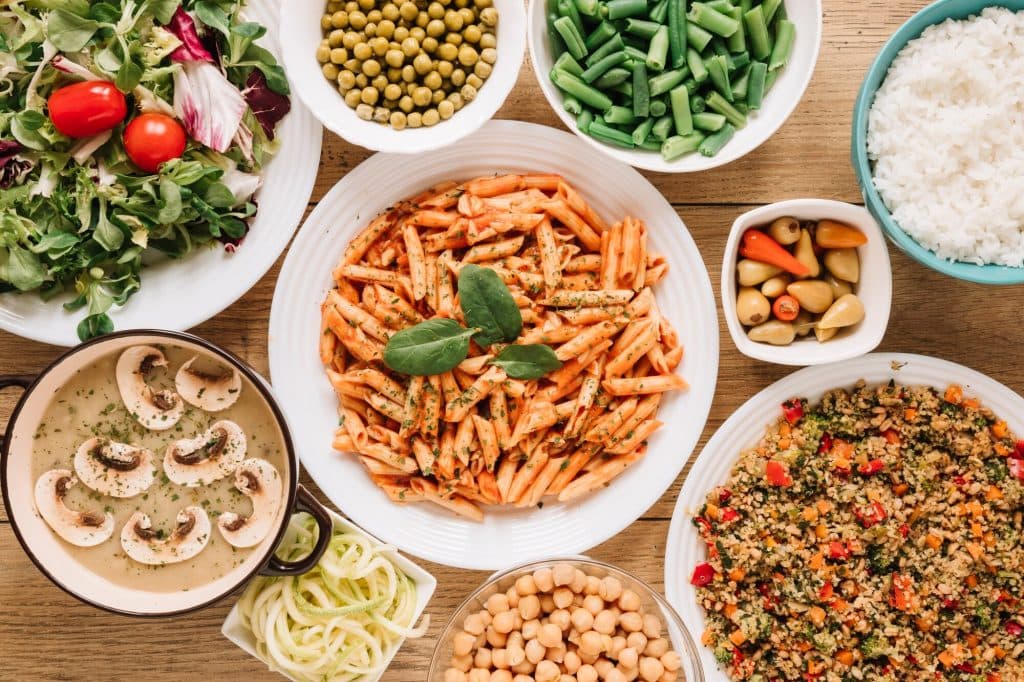
Proteins are made up of amino acids. There are nine ‘essential’ amino acids that our bodies cannot make; we must get them from food.
- Animal sources are usually ‘complete’ as they contain all nine.
- Plant sources are often ‘incomplete’ protein sources.
To get a complete profile of amino acids, when eating plant-based protein sources, it requires you need to eat a combination of different sources to get a complete profile. For example, combining grains (low in lysine) with legumes (low in methionine) allows your body to pool the amino acids to build complete proteins.
The ‘Complete’ Plant Proteins
The best protein foods for vegans contain all nine essential amino acids on their own. For example:
- Soy Products: Tofu, tempeh, and edamame beans. Tofu is particularly versatile and absorbs flavours easily.
- Quinoa: A protein-packed grain that serves as an excellent complex carbohydrate base, which can form the base of many meals.
- Buckwheat: They make up soba noodles, great for ramen!
- Pumpkin Seeds: Add these as a crunchy topper to any dish.
These foods are particularly useful when aiming to increase high protein vegan food intake.
The ‘Incomplete’ Plant Proteins
Different combinations of other vegan protein foods can help you hit your daily protein targets. Here are some examples of the different types.
1. Legumes and Pulses
A great vegan protein choice and staple in every meal. High in fibre, iron, and complex carbohydrates.
- Lentils: (Puy, red, or green). Roughly 9g of protein per 100g cooked. Mix half a cup of rice with half a cup of brown lentils to boost your protein intake.
- Chickpeas & Beans: Black beans, kidney beans, and cannellini beans. Can be thrown into any dish - roast in the oven for a crunchy topper, mix into pasta sauces, or bulk out salads.
- Peanuts: Technically a legume, peanuts have more protein per gram than nuts.
Pairing legumes with grains helps provide complete proteins and supports a high protein vegan diet.
2. Wheat Gluten (Seitan)
Seitan is one of the densest high protein vegan foods available, offering roughly 25 grams of protein per 100 grams. It is popular in high protein vegan diets but should be avoided by those with gluten intolerance.
3. Nuts and Seeds
While high in protein, they are also high in fat, so they should be treated as a topper rather than a main protein source.
They are limited in the amino acid Lysine, so they are best paired with legumes to account for this.
4. Nutritional Yeast
A staple in vegan cooking, these yellow flakes have a cheesy, nutty flavour. It is roughly 50% protein by weight and is often fortified with Vitamin B12.
Micronutrients: The Big 4 to Watch
When you remove animal products, you remove the primary sources of certain nutrients. You must plan to replace them strategically, through specific foods, or supplementation
- Vitamin B12: Found almost exclusively in animal products. Vegans must supplement this or consume heavily fortified foods (like nutritional yeast or plant milks). Deficiency can lead to fatigue and muscle weakness.
- Iron: Plant iron (non-heme) is harder to absorb. Plant-based foods that contain iron include spinach, lentils and pumpkin seeds. Aim to consume these with Vitamin C (lemon juice, peppers) to boost absorption of iron. This is particularly important for females who are more likely to experience iron deficiency and iron deficiency anaemia (Irvine et al., 2025).
- Calcium: Essential for bone health, muscle contraction and nerve signals. A key source often comes from dairy products, so vegans should look for calcium-set tofu and fortified plant milks, and dark leafy greens.
- Omega-3: Walnuts and flaxseeds provide ALA Omega-3, but the body struggles to convert this to the active forms (DHA/EPA). An algae-based supplement is often recommended to achieve optimal intake.
Healthy Meal Delivery
Transitioning to a plant-based diet requires planning to ensure you don't end up relying on beige carbohydrates. At Calo, we provide nutritionally balanced meal plans, whether you are vegan, vegetarian, or flexitarian. We ensure your protein targets are met, and your micronutrients are accounted for, delivering chef-prepared meals straight to your door. Ready to eat well without the stress? Download the Calo App to personalise your plan today.
Frequently Asked Questions
What are the best high protein vegan foods?
Some of the best options include tofu, tempeh, edamame, quinoa, lentils and seitan, as well as nutritional yeast.
Can a high protein vegan diet support muscle building?
Yes, with sufficient calories, a high protein vegan diet can fully support muscle growth and recovery. You may just be required to eat slightly more to account for the bioavailability.
What are effective vegan protein foods for everyday meals?
Legumes, soy products, nuts, seeds, and grains are versatile vegan protein foods suitable for all meals.
How can I combine vegan protein choices for complete protein?
Pairing grains, nuts and seeds with beans and vegetables ensures a complete amino acid profile.
Including a variety of high protein vegan foods in your diet shows that you can build muscle and stay strong without relying on meat. By combining these protein-rich options with a diverse range of plant-based foods, you ensure your body receives all the essential amino acids it needs. To read more about nutrients that support your overall health, read more about Vitamin B12 and Omega-3 here. You can read about more topics on the Calo blog.
References:
Rogerson, D. (2017) Vegan diets practical advice for athletes and exercisers, Journal of the International Society of Sports Nutrition, 14, pp. 1-5. Available at: https://pmc.ncbi.nlm.nih.gov/articles/PMC5598028/ (Accessed: 15 December 2025).
Irvine, A., Watt, J., Kurth, M.J., Lamont, J.V., Dowey, L., Fitzgerald, P., Niblock, A., Fairweather, A. and Ruddock, M.W. (2025) Ironically unwell: anaemia and iron deficiency among health-aware adults in the UK, Frontiers in Nutrition, 12, p.1679989. Available at: https://pmc.ncbi.nlm.nih.gov/articles/PMC12537364/
Opazo-Navarrete, M., Burgos-Díaz, C., Bravo-Reyes, C., Gajardo-Poblete, I., Chacón-Fuentes, M., Reyes, J.E. and Mojica, L. (2025) Comprehensive review of plant protein digestibility challenges assessment methods and improvement strategies, Applied Sciences, 15(7), p.3538. Available at: https://www.mdpi.com/2076-3417/15/7/3538 (Accessed: 15 December 2025).