Back to blog
Blood Pressure and Diet: What Does the Evidence Actually Say?
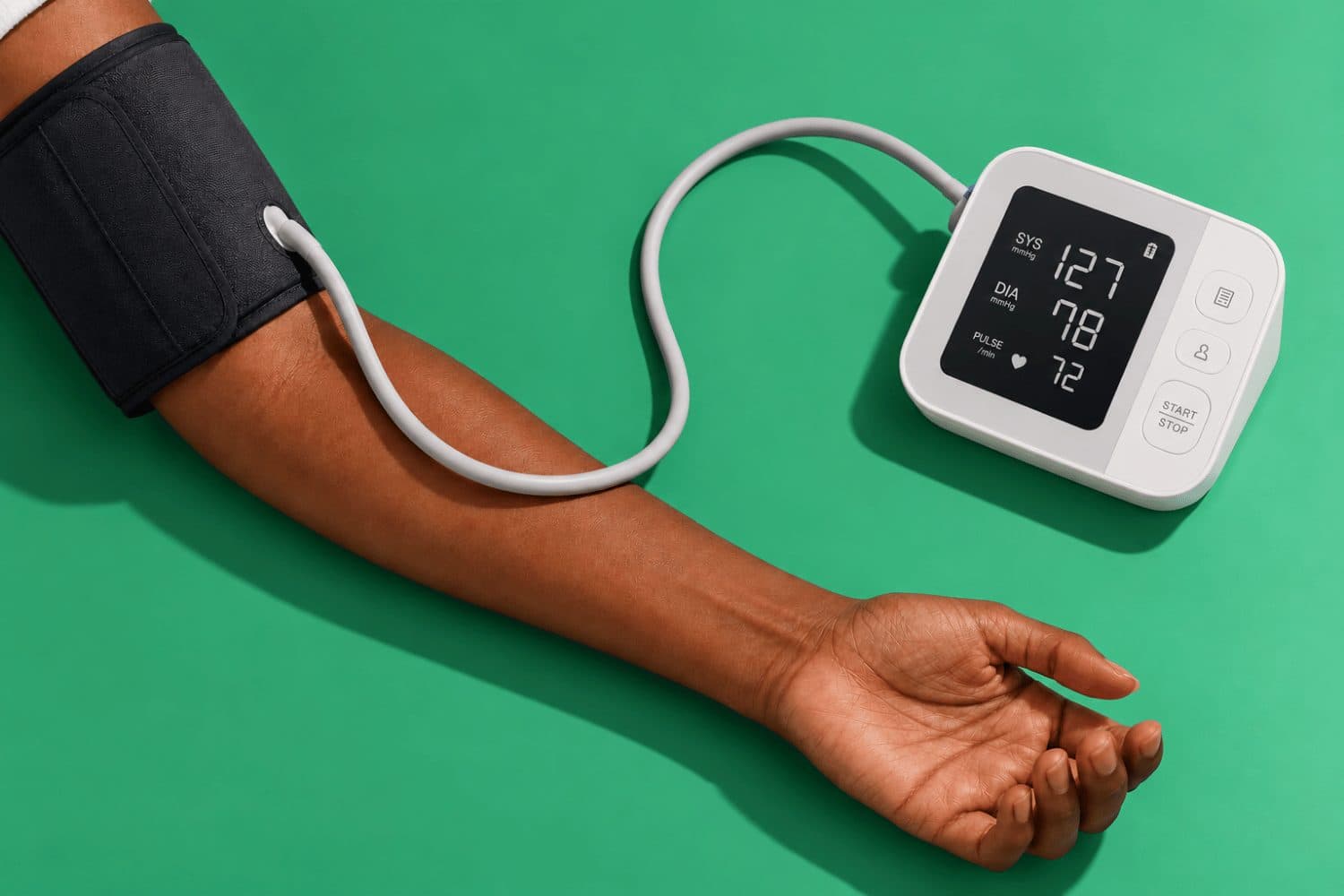
You probably know diet has something to do with blood pressure. But if you've ever tried to figure out exactly what to change, you've likely hit a wall of conflicting advice: cut salt, eat more bananas, try beetroot juice, follow the DASH diet.
Some of that advice is backed by solid research. Some of it really isn't.
Knowing the difference saves you real effort, and it matters even more if your numbers are already elevated. Let's work through what the evidence actually says.
In this article
- Why does diet affect blood pressure at all?
- What does the evidence on sodium actually show?
- Is potassium the other side of the sodium coin?
- Why do dietary patterns outperform single-nutrient changes?
- Which other dietary factors have meaningful evidence?
- How strong is the evidence for specific blood pressure foods?
- What does this mean in practice, and when should you involve a clinician?
- Frequently asked questions

Why does diet affect blood pressure at all?
Blood pressure responds to two main things: how much fluid your cardiovascular system is carrying, and how much resistance your blood vessels are putting up. Diet touches both.
Sodium pulls water into your bloodstream, raising volume. Potassium and other nutrients affect how relaxed or constricted your vessel walls stay. Excess body weight increases the workload on the heart.
These are different mechanisms, which is exactly why no single food swap fixes the whole picture.
Understanding this helps you make smarter choices. You're not hunting for one magic ingredient. You're adjusting several levers at once.
What does the evidence on sodium actually show?
Reducing sodium is the most consistently supported dietary change for blood pressure, across decades of research and multiple study types.
But the story is more nuanced than simply “use less salt.”
The biggest nuance is that individual responses vary enormously. Older adults and some ethnic groups tend to be more salt-sensitive, meaning their blood pressure responds more sharply to sodium changes. For others, the effect is real but smaller.
Salt sensitivity isn't a binary trait, and there's currently no routine clinical test to identify it reliably.
The other thing worth knowing: most dietary sodium doesn't come from your salt shaker. In a typical modern diet, the majority comes from processed and restaurant food.
Cutting back on table salt while eating heavily processed meals every day will barely move the needle.
Major health authorities do set daily sodium limits, but the targets differ across countries and regulators. What's consistently clear is that lower tends to be better for most people, especially those with elevated readings.
Is potassium the other side of the sodium coin?
Largely, yes.
Potassium has its own independent evidence for lowering blood pressure. It helps your kidneys excrete sodium more efficiently and has a direct relaxing effect on blood vessel walls.
Research suggests the ratio of sodium to potassium in your diet may matter as much as either nutrient alone.
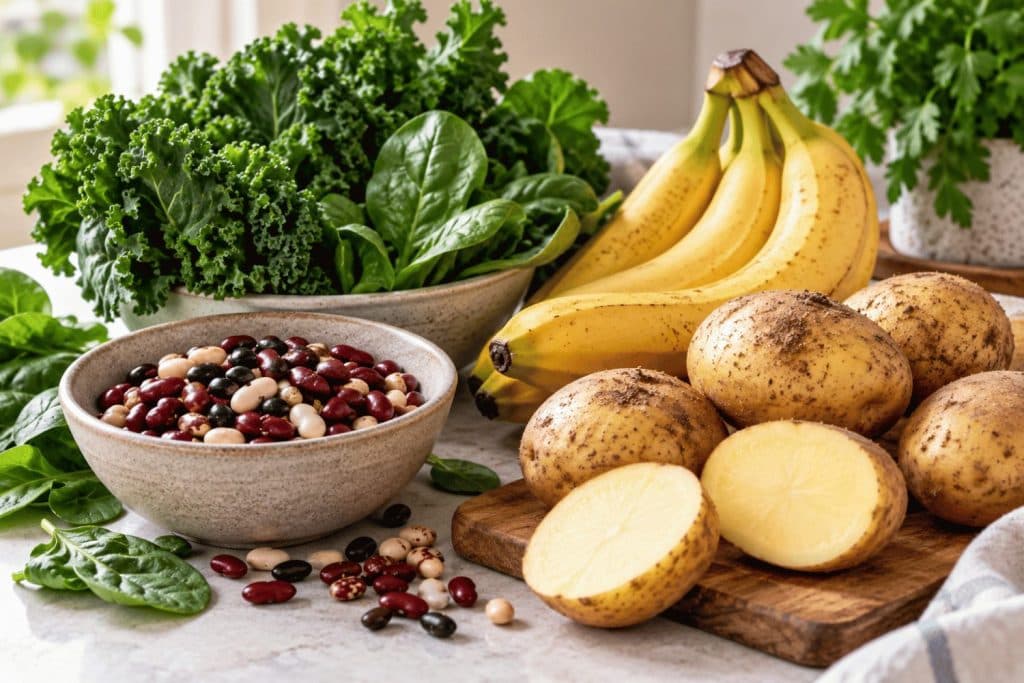
You can improve that ratio by eating more potassium-rich whole foods, such as:
- Leafy greens
- Lentils
- Beans
- Bananas
- Potatoes
- Yoghurt
One important caveat: if you have chronic kidney disease, high potassium intake can be harmful, not helpful.
When the kidneys aren't working well, potassium can build up to dangerous levels. If you have any kidney condition, talk to your doctor before significantly increasing potassium-rich foods.
Why do dietary patterns outperform single-nutrient changes?
Because multiple mechanisms act at the same time.
Eating more vegetables, fruit, and legumes while reducing processed food affects sodium, potassium, fibre, weight, and vascular function simultaneously.
The combined effect is consistently larger than any single change in isolation.
The DASH diet is the best-studied example. It has among the strongest trial evidence of any dietary approach for blood pressure, including randomized controlled trials. In people with hypertension, the reductions can be clinically meaningful.
One honest caveat: the trials that showed the largest effects provided all food to participants in controlled settings.
Real-world adherence is typically much lower, so the real-world benefit is likely more modest than the trial headlines suggest.
The underlying principles still hold:
- More vegetables
- More fruit
- More legumes
- More low-fat dairy
- Less red meat
- Less added sugar
You don't have to follow a named diet to apply those principles.
The pattern matters more than the label.
Which other dietary factors have meaningful evidence?
Weight management is another important part of the picture.
Regardless of which dietary approach achieves it, losing excess body weight consistently lowers blood pressure.
Total energy intake and overall diet quality both matter, not only specific nutrients.
Two emerging areas are worth mentioning honestly: meal timing and ultra-processed food consumption have plausible biological mechanisms and early research behind them.
But long-term trial data isn't yet strong enough to place them alongside sodium and potassium in the evidence hierarchy.
Worth watching, but not worth reorganizing your life around yet.
How strong is the evidence for specific blood pressure foods?
Beetroot, dark chocolate, hibiscus tea, celery: these come up often, and there is some research behind each.
The honest picture is that the studies are generally small, short, often industry-funded, and typically measure surrogate markers rather than long-term outcomes.
That doesn't make these foods useless.
It means their evidence is preliminary, and placing them in the same category as dietary pattern research would be misleading.
The practical move is simple: build the pattern first — more whole foods, less processed food, attention to sodium and potassium — then enjoy specific foods you like on top of that foundation.
What does this mean in practice, and when should you involve a clinician?
The changes with the strongest evidence are:
- Reduce sodium from processed and restaurant foods.
- Increase potassium through whole foods, with the kidney-health caveat.
- Manage body weight through a sustainable eating approach.
- Move toward a pattern with more vegetables, legumes, and fruit.
If you're on blood pressure medication, involve your doctor before making significant dietary changes.
Dietary shifts can genuinely interact with antihypertensive medications, and the combination matters clinically.
Diet is a complement to medical care, not a replacement for it.
If you'd like a starting point that handles the nutritional planning, Calo's plans are built around a per-meal sodium ceiling of 650mg and prioritise whole and minimally processed ingredients, which aligns with the dietary pattern principles that have the strongest evidence base.
The most important move: pick one lever that fits your current life and start there.
Small, consistent changes compound over time.
Frequently asked questions
Does cutting salt alone lower blood pressure significantly?
For some people, yes, particularly those who are salt-sensitive, which is more common in older adults and certain ethnic groups.
For many others, the effect of salt reduction alone is modest.
The bigger opportunity is reducing sodium from processed and restaurant foods, which tend to be the main source, not the salt shaker.
Do I need to follow the DASH diet specifically?
Not specifically.
The DASH diet has strong trial evidence, but the principles behind it matter more than the name: more vegetables, fruit, legumes, and whole grains, less processed food and added sugar.
Any eating pattern that moves in that direction is likely to produce similar benefits.
Can potassium-rich foods help everyone lower blood pressure?
They tend to help most people, but not everyone.
If you have chronic kidney disease, high potassium intake can be harmful because the kidneys may not regulate potassium levels properly.
Check with your doctor before significantly increasing potassium-rich foods if you have any kidney condition.
How much does weight loss affect blood pressure?
Research consistently shows that losing excess body weight lowers blood pressure, regardless of the dietary approach used to achieve it.
Even modest weight loss can produce meaningful reductions in people with elevated readings.
Overall energy intake and diet quality both matter, not only which specific nutrients you adjust.
Can I manage blood pressure through diet alone without medication?
Dietary changes can produce meaningful reductions, especially in people with stage 1 or stage 2 hypertension.
But whether diet alone is sufficient depends on your individual readings, risk factors, and medical history.
Dietary shifts can also interact with blood pressure medications in clinically significant ways.
Anyone with diagnosed hypertension or already on medication should discuss dietary changes with their doctor rather than treating diet as a standalone approach.