Back to blog
Stimulating The Vagus Nerve for Deep Recovery
The modern world is chronically overstressed, and life keeps accelerating. Many of us juggle busy work schedules, constant digital stimulation, and limited downtime, so it’s no surprise that digestive issues, low mood, and chronic stress are on the rise.
At the same time, interest in performance, longevity, and biohacking has grown. Practices like ice baths, saunas, HIIT, and intermittent fasting are now mainstream, often used to improve health and resilience. While these approaches rely on short, controlled stressors (hormetic stress) that benefit the body, layering them on already high-stress lifestyles without adequate recovery can keep the body in chronic sympathetic activation, or ‘fight or flight’. This is where nervous system regulation and the role of the vagus nerve become essential.

What Is the Vagus Nerve
Often referred to as the body's superhighway. It is the longest cranial nerve in the body, and it runs from the brainstem down to the heart, lungs, and digestive tract.
It is the main driver of the parasympathetic nervous system, commonly known as the ‘rest and digest’ state. Strong nerve function is associated with:
- Better stress resilience
- Improved digestion
- Reduced inflammation
- More stable mood
- Healthier immune function
Many modern wellness practices increase cortisol and stress the nervous system. To counterbalance this, we need active relaxation through vagus nerve stimulation. While practices like cold plunges can help build resilience, it’s equally important to prioritise gentle, stress-free techniques that deeply activate the parasympathetic state.
Learn how to improve your body’s immune function here.
Gut Health and Stress
Digestive issues are increasingly common: bloating, altered bowel habits, and inflammation. While diet plays a role, gut health is deeply influenced by stress and nervous system regulation.
When we’re under chronic stress, blood flow is diverted away from digestion towards muscles and the brain. The more activated the sympathetic nervous system becomes, the harder it is to digest food efficiently. Supporting vagus nerve function is therefore essential for restoring digestive balance.
Read more about Gut Health here.
5 Simple Stress-Free Ways to Stimulate the Vagus Nerve
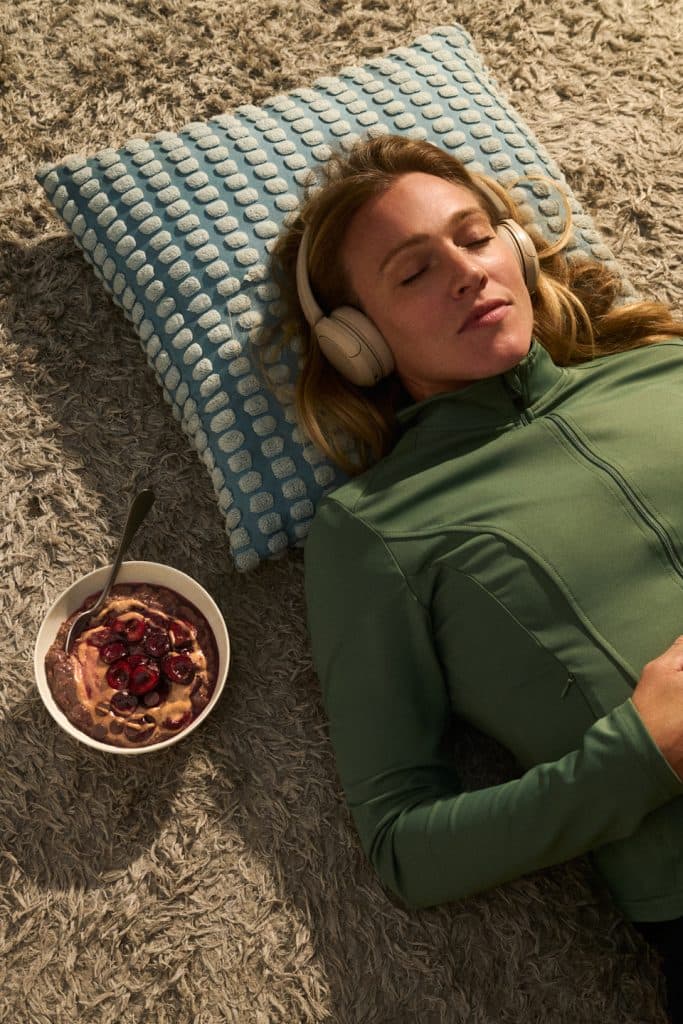
These are some of the best practises to actually trigger activation of the nerve to trigger the parasympathetic response.
1. Mechanical Activation (Neck & Eye Movement)
A major branch of the vagus nerve runs alongside the muscles of the neck. We can use this awareness to explore a vagus nerve massage to support downregulation.
Try this:
Keep your head still and look up and to the right using only your eyes. Hold for 30–60 seconds until you feel a sigh, yawn, or swallow. Repeat on the left. These are signs your nervous system is downshifting.
Keep your head still and look up and to the right using only your eyes. Hold for 30–60 seconds until you feel a sigh, yawn, or swallow. Repeat on the left. These are signs your nervous system is downshifting.
2. Humming & Vocal Vibration
The vagus nerve passes through the vocal cords, making sound one of the fastest ways to stimulate it.
Try this:
Slow breathing combined with humming. Research shows humming can increase nitric oxide production in the sinuses by up to 15-fold, improving circulation and calming the nervous system. This is one of the simplest vagus nerve exercises you can practise consistently.
Slow breathing combined with humming. Research shows humming can increase nitric oxide production in the sinuses by up to 15-fold, improving circulation and calming the nervous system. This is one of the simplest vagus nerve exercises you can practise consistently.
3. Exhale-Focused Breathing
The vagus nerve helps regulate heart rate through breathing.
Try this:
Make your exhale longer than your inhale. The 4–7–8 technique works well: inhale for 4, hold for 7, exhale for 8. This directly signals safety to the body.
Make your exhale longer than your inhale. The 4–7–8 technique works well: inhale for 4, hold for 7, exhale for 8. This directly signals safety to the body.
4. Happy Gut = Happy Brain
Vagus nerve function is affected by our gut. The gut and brain are intimately connected via this nerve, also known as the gut-brain axis.
Feed your microbiome to support vagus nerve function in the right ways:
5. Social Safety & Connection
True vagal activation requires a sense of safety. Eye contact, laughter, meaningful conversation, and shared experiences activate the ventral vagal state, which supports emotional regulation and well-being.
In a world dominated by constant digital stimulation, intentional real-world connection has become more important than ever.
Healthy Meal Delivery
Calo carefully designs each meal to be high in fibre, promoting gut health and supporting both your vagus nerve function and overall mood. Download the Calo App; our meal prep service offers delicious meal plans, delivered right to your door. Book a free consultation with our nutritionist to discuss your symptoms and find a plan that works for you.
FAQ
What is the vagus nerve exactly?
The vagus nerve is the longest cranial nerve in the body and a central regulator of stress, digestion, inflammation and mood.
Where is the vagus nerve located in the body?
It begins in the brainstem and travels down through the neck into the chest and abdomen, connecting the heart, lungs and digestive organs.
How can you simulate the vagus nerve effectively?
Specific breathing techniques, humming, and gentle massage, cold exposure and gentle practices are common ways people support nervous system regulation.
Conclusion
Stimulating the vagus nerve doesn’t have to be complicated or expensive; many effective techniques, from simple breathing exercises to gentle exercises and mindful daily habits, can be done easily at home. Prioritising rest and recovery is just as important as activity for long-term health. At Calo, we focus on eating for both your gut and your brain, supporting overall function and emotional well-being. Learn more about IBS and GLP-1 support on the Calo blog.